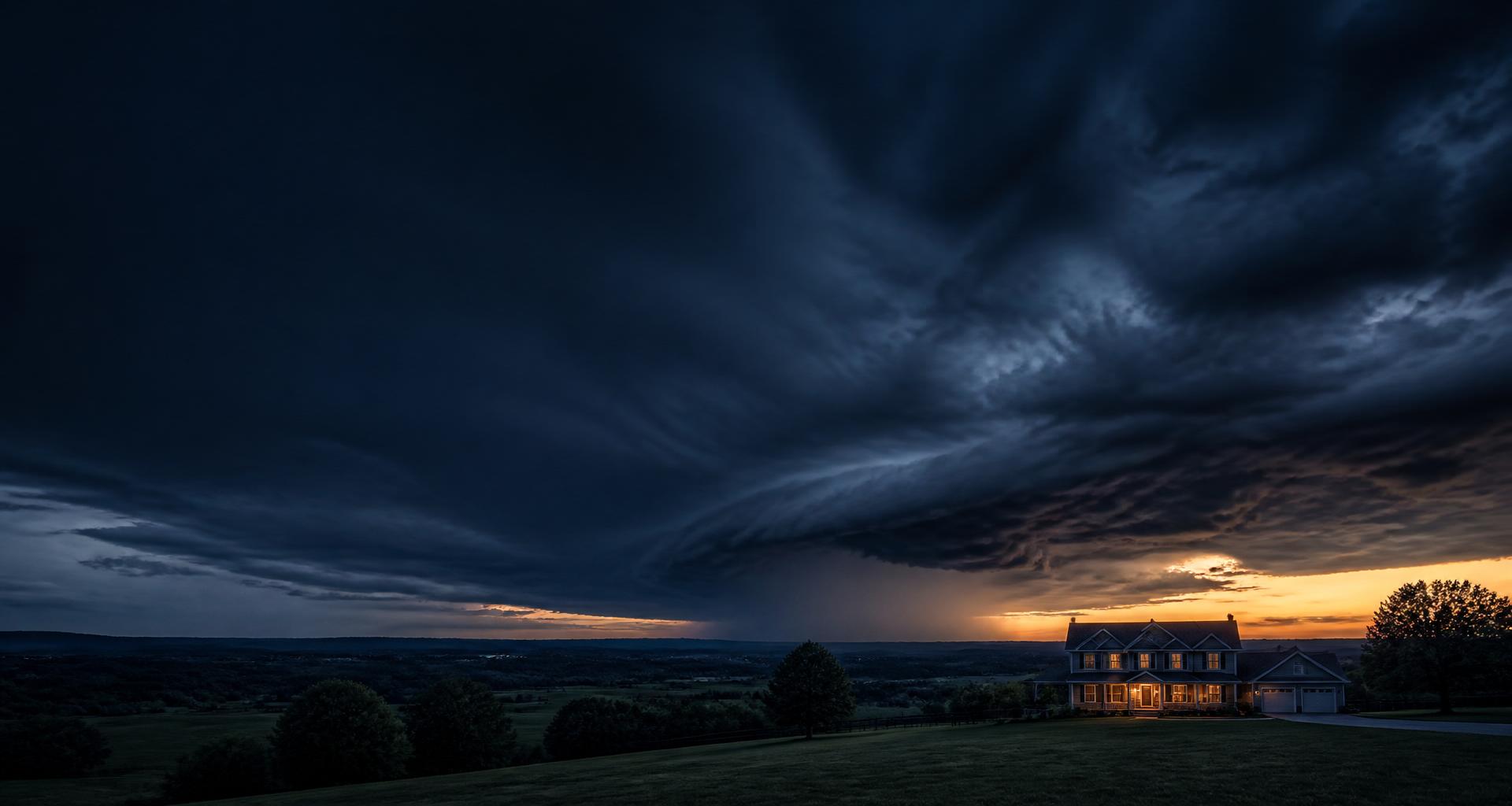
1. Why severe storms & tornadoes are the threat most homeowners underestimate
Severe convective storms — thunderstorms, hail, and tornadoes — cause more billion-dollar disaster events in the United States than any other hazard.
According to NOAA's Billion-Dollar Weather and Climate Disasters database, severe storms show up on the annual list more often than hurricanes, wildfires, or winter storms combined. They also strike a much wider geography — every state in the Lower 48 sees damaging thunderstorm winds, hail, or tornadoes in a typical year.
Most homeowners think of storms as a nuisance until a single event — hail totaling the roof, a straight-line wind snapping a tree onto the house, or a tornado passing within a mile — turns into a five-figure claim. Preparation is what separates a stressful weekend from a year-long insurance fight.
2. Before the storm: hardening your home
Most storm damage starts with something small you could have fixed on a dry Saturday.
Walk this checklist once a season, and again when a named system is in the forecast:
- Roof. Inspect for lifted, cracked, or missing shingles. Check flashing around chimneys and vents. Fix small issues before wind finds them.
- Gutters & downspouts. Clear debris so water drains away from the foundation instead of overflowing under the roofline.
- Trees & limbs. Remove dead limbs and any branches overhanging the roof, driveway, or power lines.
- Windows & doors. Consider impact-rated windows or plywood covers pre-cut and labeled for each opening. Reinforce garage doors — they're a common failure point in high winds.
- Outdoor items. Move or anchor patio furniture, grills, trash cans, planters, trampolines, and anything else that can become a projectile.
- Generator safety. Only run generators outdoors, at least 20 feet from windows and doors. Never in a garage — even with the door open.
- Sump pump. Test it. Confirm the discharge line is clear. Consider a battery backup so it runs when the power goes out.
3. Documenting your home before disaster (the step almost everyone skips)
Adjusters pay claims on proof — and undocumented belongings are the single biggest reason homeowners get underpaid.
After a total loss, insurers ask for a room-by-room inventory of what you owned. Most people can name the big items — the TV, the fridge, the sofa — but forget the hundreds of smaller items that add up to real money: tools in the garage, dishes and small appliances in the kitchen, contents of every closet.
Do this on a normal Sunday, long before you need it:
- Walk every room with your phone and record slow, deliberate video. Open closets, drawers, and cabinets.
- Photograph the front of every appliance and its data plate (brand, model, serial number).
- Keep receipts, order confirmations, and warranty registrations for expensive items.
- Store the whole record off-site — cloud storage, an email to yourself, or a service that keeps a timestamped copy.
4. After the storm: the first 48 hours
Safety first, documentation second, and no permanent repairs until the adjuster has seen the damage.
- Check on people first. Account for family and neighbors. Stay clear of downed power lines, gas leaks, and damaged structures. If you smell gas, leave and call your utility from outside.
- Document damage before you clean up. Photograph and video everything from multiple angles — exterior, roof (from the ground), interior rooms, damaged belongings, and the debris field.
- Make temporary repairs to prevent further damage. Tarp the roof, cover broken windows, move wet belongings to dry spots. Keep every receipt — insurers reimburse reasonable mitigation costs.
- Do not do permanent repairs before the adjuster inspects. Cleaning up broken glass is fine. Replacing the roof or gutting drywall before the adjuster arrives is not — you'll lose leverage on the estimate.
5. How to file a home insurance claim
A clean, well-documented claim gets paid faster and closer to full value.
- Contact your insurer as soon as possible. Most carriers have a 24/7 claims line. Have your policy number ready.
- Get a claim number and the adjuster's name. Write both down and put them at the top of every email and note.
- Send your documentation. Photos, video, receipts, your pre-loss inventory, and a written summary of what happened.
- Meet the adjuster in person. Walk them through the damage. Point out anything easy to miss — hail-bruised shingles, water intrusion behind trim, damaged HVAC condensers.
- Review the itemized settlement carefully. Ask questions. If items are missing or valued low, respond in writing with your evidence.
- Keep a claims diary. Date, person, phone number, what was said. It's the single most useful document if a claim drags out.
Note: Standard homeowners policies do not cover flooding. Rising water requires a separate NFIP or private flood policy.
6. Federal disaster assistance (FEMA)
If the President declares your area a disaster, FEMA can help — but only after your insurance claim.
File your insurance claim first. FEMA cannot duplicate benefits that insurance already covers, but it can help with uninsured or underinsured losses, temporary housing, and other needs.
Apply at DisasterAssistance.gov or call the FEMA Helpline at 1-800-621-3362.
7. Find your state
Local hazards, state emergency-management contacts, and claim steps by state. We're rolling these out one at a time — Georgia is live now, more on the way.
Frequently asked questions
Official Resources
-
FEMAFederal Emergency Management Agency
-
Ready.gov — TornadoesOfficial tornado preparedness guide
-
Ready.gov — Thunderstorms & LightningSevere thunderstorm safety
-
NOAA Storm Prediction CenterLive severe-weather outlooks and watches
-
DisasterAssistance.govApply for federal disaster help
-
NFIP / FloodSmartFlood insurance — NFIP Help 1-800-427-4661
-
FEMA Helpline1-800-621-3362