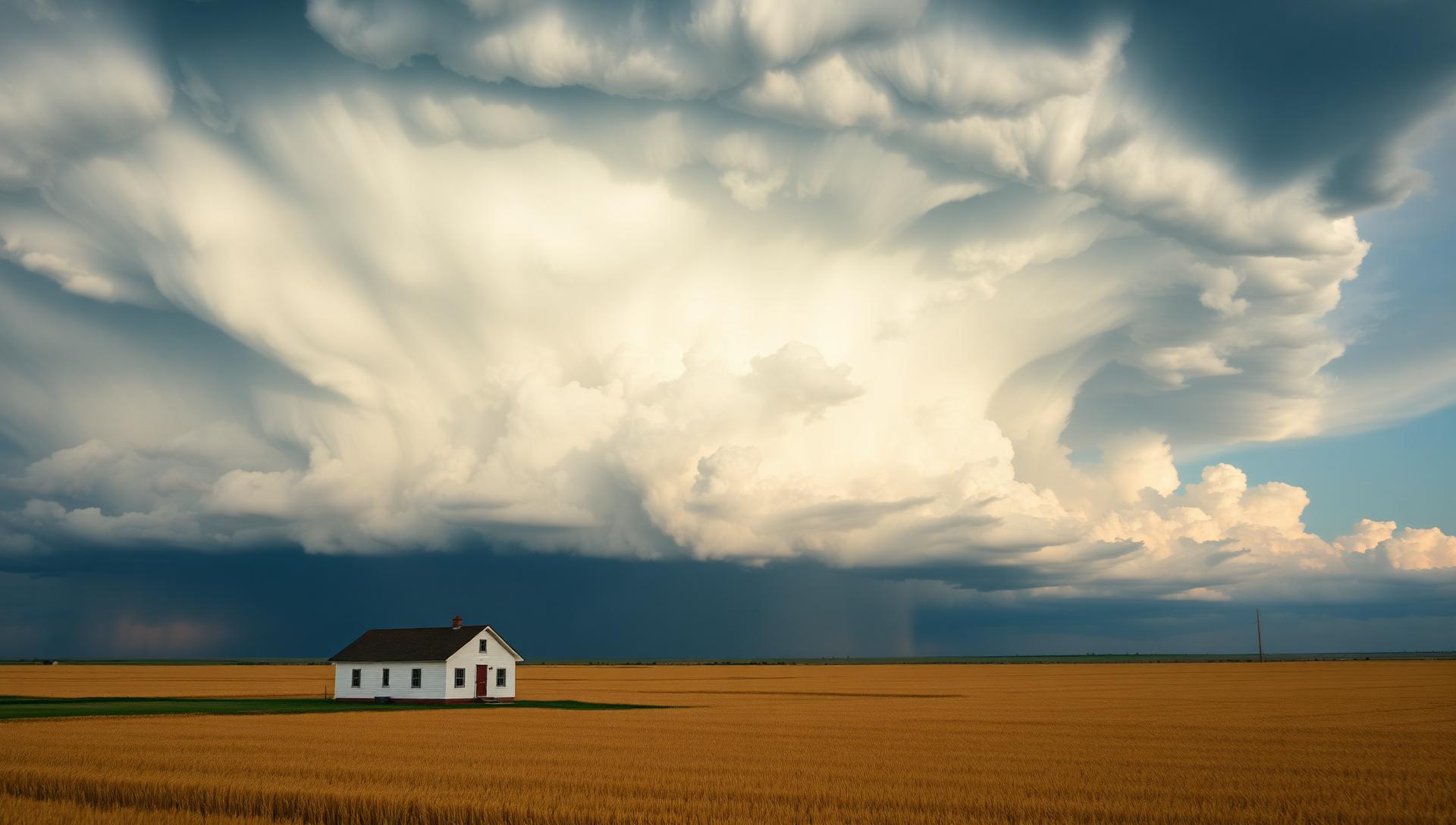
1. Kansas's severe weather risk, by the numbers
Kansas is one of the most tornado-prone states in the country, and its claim burden extends well past tornadoes — giant hail, derechos, flash and river flooding, blizzards, and grass wildfire all hit hard.
Kansas averages roughly 90 tornadoes a year and sits in the heart of Tornado Alley. The state's benchmark event is the Greensburg EF5 of May 4, 2007, which effectively destroyed the entire town. Peak severe season runs April through June, with May the single most active month.
Giant hail and damaging straight-line wind (including summer derechos) drive an even larger share of Kansas claim volume than tornadoes themselves. Flash and river flooding are common with Plains thunderstorm complexes, and Kansas winters bring significant blizzards, ice storms, and extreme cold — with wildfire risk on dry, windy days year-round, especially in the Flint Hills.
2. Kansas seasonal preparedness timeline
Month-by-month, what's likely, and what to do this month to be ready.
| Months | Primary hazard | Do this month |
|---|---|---|
| Apr – Jun | Peak tornado + giant hail season | Test the storm shelter/safe room, review your wind/hail deductible, refresh your home inventory, keep weather radios charged. |
| Jul – Aug | Summer storms, derechos, flash flooding | Trim limbs, secure outbuildings and trampolines, service the generator, top up fuel. |
| Sep – Oct | Secondary severe + early cold-season risk | Recheck the roof and gutters, back up documents, test smoke and CO alarms, insulate exposed pipes. |
| Nov – Mar | Blizzards, ice storms, extreme cold | Winterize outdoor faucets, stock 3 days of water/food, fuel and service the generator, know how to shut off water at the main. |
| Year-round | Grass wildfire (dry/windy days) | Keep a defensible space around the home, clear dead vegetation, and monitor red-flag warnings — especially in the Flint Hills. |
3. Hardening your Kansas home
In Kansas, the biggest claim drivers are tornado wind, giant hail, straight-line wind from derechos, and winter freeze damage.
- Storm shelter or FEMA safe room. An underground shelter or above-grade FEMA P-320 / ICC 500 safe room is the highest-impact upgrade a Kansas homeowner can make. Especially critical for mobile homes and single-story houses without basements. Check with your county EM about registration and any available shelter grants.
- Hail-rated roof (Class 4 impact). Ask your roofer about Class 4 (UL 2218) impact-resistant shingles or metal roofing. Many Kansas insurers offer meaningful hail-resistant roof discounts — ask for the discount in writing after installation.
- Secure outbuildings, trampolines & yard debris. Straight-line wind and tornado outer bands turn unsecured sheds, trampolines, grills, and patio furniture into missiles. Anchor them or move them into a garage/barn when severe weather is forecast.
- Tree & limb management. Trim overhanging limbs from the roof and power lines, and remove dead trees before spring severe season. Post-storm tree damage is one of the most common Kansas claim types.
- Generator safety. Operate generators outdoors only, at least 20 feet from windows and doors. Never inside a garage — even with the door open. Blizzard and severe-storm outages last days, and CO poisoning kills every year.
- Winterize for blizzards & ice. Insulate exposed pipes, install foam covers on outdoor faucets, keep the furnace serviced, and know where the main water shutoff is. Ice-storm power outages can last a week or more in rural Kansas.
4. Document your home before the storm
Kansas's extreme tornado and hail frequency makes pre-loss documentation decisive — when a tornado takes the whole house, what you can prove is what gets paid.
The Kansas Division of Emergency Management recommends creating a detailed home inventory — room-by-room photos or video of your belongings — and storing it somewhere that will survive the event that damages your home. Adjusters pay claims on proof, and undocumented belongings are the single biggest reason Kansas homeowners get underpaid after a tornado or major hail event.
- Walk every room with your phone and record slow, deliberate video. Open closets, drawers, and cabinets.
- Photograph the front of every appliance and its data plate (brand, model, serial number).
- Photograph the roof from the ground on all four sides before hail season — a dated "before" shot is decisive when carriers argue over hail-vs-wear-and-tear.
- Store the whole record off-site — cloud storage, an email to yourself, or a service that keeps a timestamped copy.
5. After a storm in Kansas: first steps
- Call 911 for any life-threatening emergency. Account for family and neighbors. Avoid downed power lines, gas leaks, standing floodwater, and unstable structures. Never enter a damaged building until it's cleared.
- Document damage before you clean up. Photograph and video every angle — exterior, roof from the ground, interior rooms, damaged belongings, and hail impacts on siding, vehicles, and outdoor units. Adjusters use these images months later.
- Make temporary repairs. Tarp the roof, board broken windows, move wet items to dry spots. Save every receipt — insurers reimburse reasonable mitigation costs.
- Wait for the adjuster before permanent repairs. Cleaning up debris is fine; replacing a roof before the adjuster inspects will cost you on the estimate.
- Beware post-storm contractor scams. Kansas sees an influx of door-to-door "storm chaser" roofers and remediation crews after major hail and tornado events. Never pay in full up front, never sign an assignment-of-benefits form under pressure, and verify a contractor's license and references before hiring.
6. How to file a home insurance claim in Kansas
- Call your insurer's 24/7 claims line. Have your policy number ready.
- Get a claim number and adjuster name in writing. Put both at the top of every email and note.
- Send your documentation. Photos, video, receipts, your pre-loss inventory, and a written summary of what happened.
- Meet the adjuster on-site. Walk them through every damaged area — including easy-to-miss items like hail-bruised shingles, dented HVAC condenser fins, and cracked skylights.
- Review the itemized settlement carefully. Confirm the correct wind/hail deductible was applied. If items are missing or valued low, respond in writing with your evidence.
- Keep a claims diary. Date, person, phone number, what was said.
- If unresolved, contact the Kansas Insurance Department Consumer Assistance: 1-800-432-2484 (785-296-3071).
Reminder: Standard Kansas homeowners policies do not cover flooding — including flash flooding, river flooding, and water backing up through drains. Flood coverage requires a separate NFIP or private flood policy, and most NFIP policies have a 30-day waiting period.
7. Kansas emergency contacts
| Need | Contact |
|---|---|
| Life-threatening emergency | 911 |
| Kansas Insurance Department | 1-800-432-2484 |
| KID (Topeka area) | 785-296-3071 |
| FEMA Disaster Assistance | 1-800-621-3362 |
| NFIP Flood Insurance | 1-800-427-4661 |
| County EM directory | kansastag.gov |
| NWS Wichita | weather.gov/ict |
| NWS Topeka | weather.gov/top |
| NWS Dodge City | weather.gov/ddc |
8. County & regional coordination
The Kansas Division of Emergency Management (KDEM) coordinates statewide response, and every county has its own EM office that handles local shelter, damage reporting, and warnings on the ground. Your county EM office is what you need on hand during a tornado outbreak — find yours through kansastag.gov before storm season, not while a warning is up.
Frequently asked questions
Official Kansas Resources
-
Kansas Division of Emergency ManagementState coordination + county EM directory
-
Kansas Insurance DepartmentConsumer Assistance 1-800-432-2484
-
DisasterAssistance.govApply for federal disaster help
-
NFIP FloodSmartFlood insurance information — 1-800-427-4661
-
NOAA Storm Prediction CenterLive severe-weather outlooks and tornado watches
-
NWS WichitaOfficial forecasts and warnings for south-central Kansas
For the full preparedness, documentation, and claims playbook — plus other state guides as they roll out — see our main Storm & Tornado Preparedness Guide.