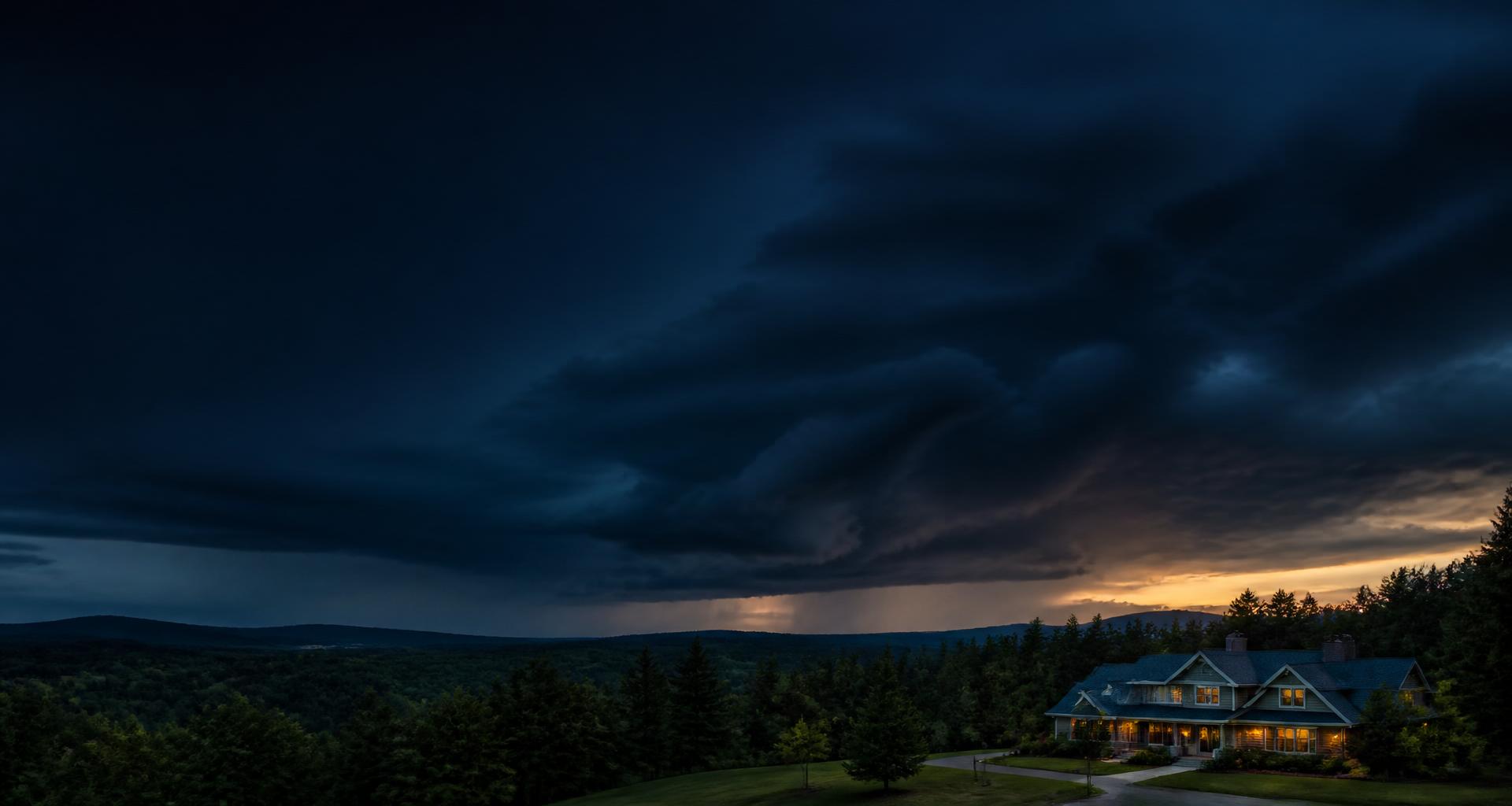
1. Georgia's severe weather risk, by the numbers
Georgia sits in "Dixie Alley" — where tornadoes are more likely to strike at night and in the cool season, which is why they're statistically deadlier than Great Plains tornadoes.
The state's primary tornado peak runs March through May, with a well-documented secondary peak in November. Between those peaks, Georgia sees frequent severe thunderstorms with damaging hail and straight-line winds — the kind of wind event that totals a roof or drops a mature pine on a home.
North Georgia adds winter ice storms to the mix, which bring down limbs and power lines across the mountains and Piedmont. Along and inland from the coast, Georgia is exposed to hurricane remnants and tropical systems — Hurricane Helene (September 2024) caused catastrophic wind, tree, and flood damage across central and east Georgia hundreds of miles from where it made landfall.
2. Georgia seasonal preparedness timeline
Month-by-month, what's likely, and what to do this month to be ready.
| Months | Primary hazard | Do this month |
|---|---|---|
| Dec – Feb | Winter ice storms (esp. N. Georgia) | Trim brittle limbs, service generator, insulate exposed pipes, keep pantry + water for 72 hrs. |
| Mar – May | Peak tornado season | Sign up for county emergency alerts, identify safe room, practice sheltering, keep phones charged. |
| Jun – Aug | Severe thunderstorms, hail, straight-line winds | Clear gutters, secure loose outdoor items, inspect roof, review policy limits before season's peak. |
| Sep – Oct | Hurricane remnants + tropical systems inland | Fill vehicles, refill prescriptions, back up documents, know your evacuation route (coastal counties). |
| Nov | Secondary tornado peak | Recheck safe room, re-test smoke/CO alarms, confirm home inventory is current before year-end. |
3. Hardening your Georgia home
In Georgia, the biggest claim drivers are falling trees, wind-lifted roofs, and water intrusion from red-clay soil that doesn't drain.
- Tree canopy. Georgia's tall pines are beautiful and dangerous. Have an arborist look at any pine within striking distance of the house. Remove dead limbs and lean trees before storm season, not after.
- Red-clay drainage. Clay soil sheds water instead of absorbing it. Keep gutters clear, extend downspouts 6–10 feet from the foundation, and grade soil away from the house to prevent basement/crawlspace flooding.
- Roof & gutters. Inspect shingles and flashing each spring and fall. Replace lifted or cracked shingles before wind finds them. Consider hip-roof or impact-rated shingle upgrades when re-roofing.
- Interior safe room. Most Georgia homes don't have basements. Identify a small interior room on the lowest floor — a bathroom, closet, or hallway with no windows and as many walls as possible between you and the outside.
- Windows & garage doors. Reinforce garage doors — a common failure point in high winds. Pre-cut plywood covers or impact-rated glass protect openings when watches turn into warnings.
- Generator safety. Operate generators outdoors only, at least 20 feet from windows and doors. Never inside a garage — even with the door open.
- Ice-storm prep (N. GA). Insulate exposed pipes, keep a supply of drinking water, and don't run gasoline heaters indoors. Trim brittle limbs over the driveway and roof in late fall.
4. Document your home before the storm
Georgia's own emergency-management agency puts this in writing: photograph your home and keep an off-site inventory before disaster strikes.
GEMA/HS's insurance planning guidance explicitly recommends creating a detailed home inventory — room-by-room photos or video of your belongings — and storing it somewhere that will survive the event that damages your home. Adjusters pay claims on proof, and undocumented belongings are the single biggest reason Georgia homeowners get underpaid.
- Walk every room with your phone and record slow, deliberate video. Open closets, drawers, and cabinets.
- Photograph the front of every appliance and its data plate (brand, model, serial number).
- Keep receipts, order confirmations, and warranty registrations for expensive items.
- Store the whole record off-site — cloud storage, an email to yourself, or a service that keeps a timestamped copy.
5. After a storm in Georgia: first steps
- Call 911 for any life-threatening emergency. Account for family and neighbors. Avoid downed power lines, gas leaks, and damaged structures. Report gas smells from outside.
- Document damage before you clean up. Photograph and video every angle — exterior, roof from the ground, interior rooms, damaged belongings, downed trees, and debris.
- Make temporary repairs. Tarp the roof, cover broken windows, move wet items to dry spots. Save every receipt — insurers reimburse reasonable mitigation costs.
- Wait for the adjuster before permanent repairs. Cleaning up glass and debris is fine; replacing a roof or gutting drywall before the adjuster inspects will cost you on the estimate.
- Beware post-storm contractor scams. Georgia sees a surge of door-to-door "storm chaser" roofers after major events. Never pay in full up front, never sign an assignment-of-benefits form under pressure, and verify a Georgia contractor's license before hiring.
6. How to file a home insurance claim in Georgia
- Call your insurer's 24/7 claims line. Have your policy number ready.
- Get a claim number and adjuster name in writing. Put both at the top of every email and note.
- Send your documentation. Photos, video, receipts, your pre-loss inventory, and a written summary of what happened.
- Meet the adjuster on-site. Walk them through every damaged area — especially easy-to-miss items like hail-bruised shingles, water behind trim, and HVAC condenser damage.
- Review the itemized settlement carefully. If items are missing or valued low, respond in writing with your evidence.
- Keep a claims diary. Date, person, phone number, what was said.
- If unresolved, file a consumer complaint with the Georgia Office of Commissioner of Insurance and Safety Fire Consumer Services line: 1-800-656-2298 (Atlanta: 404-656-2070).
Reminder: Standard Georgia homeowners policies do not cover flooding — including flooding from hurricane remnants. Rising water requires a separate NFIP or private flood policy.
7. Georgia emergency contacts
| Need | Contact |
|---|---|
| Life-threatening emergency | 911 |
| Georgia Emergency Management (GEMA/HS) | (404) 635-7200 / 1-800-879-4362 |
| Georgia Office of Insurance (claims help) | 1-800-656-2298 |
| FEMA Disaster Assistance | 1-800-621-3362 |
| NFIP Flood Insurance | 1-800-427-4661 |
| Find your county EMA | gema.georgia.gov/locations |
| NWS Peachtree City (Atlanta forecast) | weather.gov/ffc |
8. County & regional coordination
GEMA/HS organizes Georgia into 8 field regions, and every county has a local Emergency Management Agency (EMA) that handles on-the-ground response, shelters, and damage reporting. Your county EMA is usually the fastest number to have on hand during and after an event — find your county EMA at gema.georgia.gov/locations.
Frequently asked questions
Official Georgia Resources
-
GEMA/HSGeorgia Emergency Management & Homeland Security Agency
-
GEMA/HS — Insurance PlanningState guidance on documenting your home before disaster
-
GEMA/HS — Find Local EMACounty emergency-management directory (8 field regions)
-
Georgia Office of InsuranceConsumer Services 1-800-656-2298 / Atlanta 404-656-2070
-
NWS Peachtree CityOfficial National Weather Service forecast office for north/central Georgia
-
Ready GeorgiaState preparedness plans, kits, and family guidance
-
DisasterAssistance.govApply for federal disaster help
-
NFIP FloodSmartFlood insurance information — 1-800-427-4661
For the full preparedness, documentation, and claims playbook — plus other state guides as they roll out — see our main Storm & Tornado Preparedness Guide.