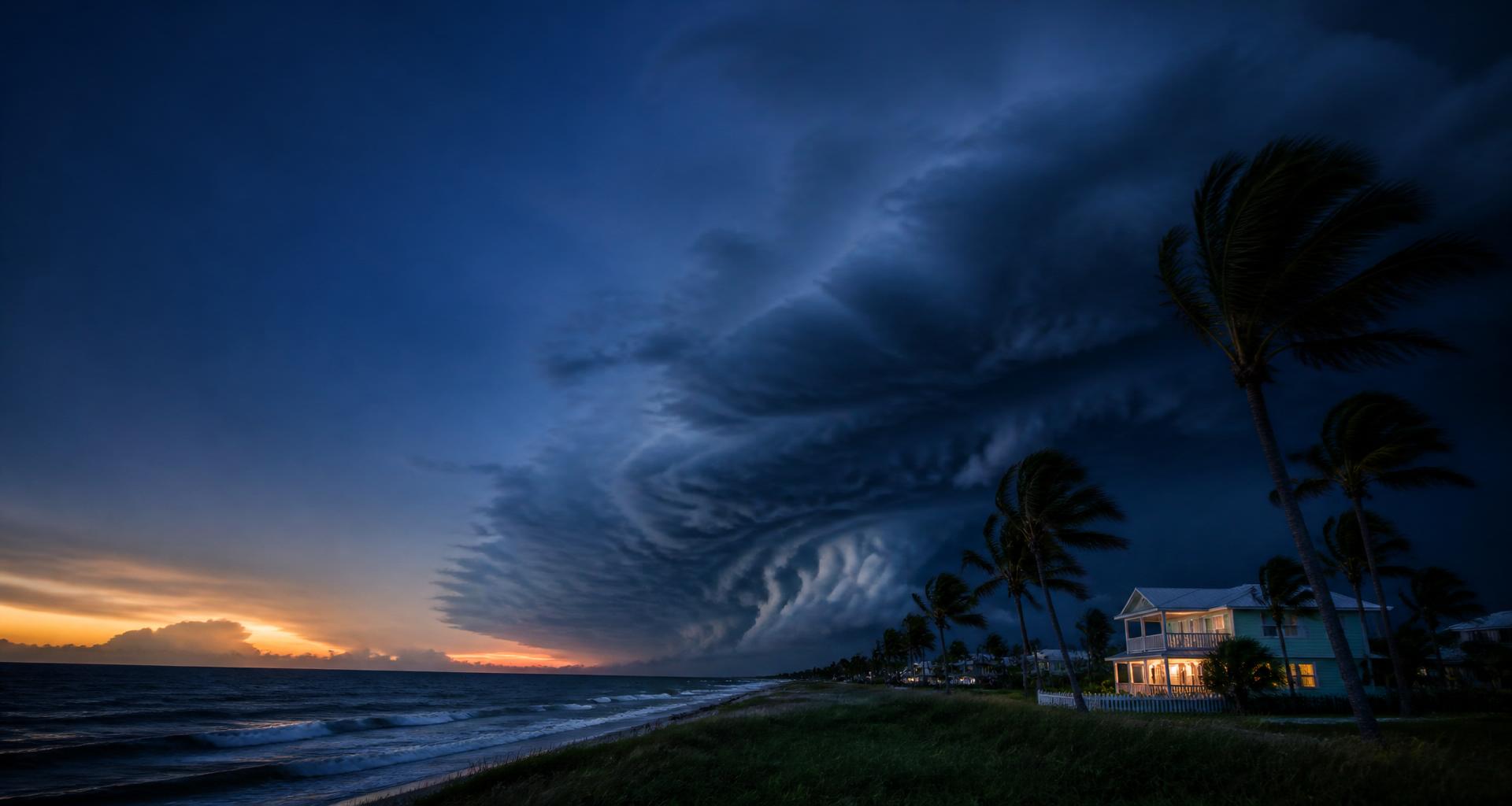
1. Florida's severe weather risk, by the numbers
Florida is the #1 hurricane-exposed state in the country — landfalls, storm-surge risk, and total insured losses all lead the nation.
Hurricane Ian (September 2022) made landfall on the Southwest Florida coast as a high-end Category 4, driving catastrophic storm surge into Fort Myers Beach and Sanibel and causing tens of billions in insured damage. In 2024, Hurricane Helene struck the Big Bend and pushed record surge into the Nature Coast, then Hurricane Milton came ashore near Siesta Key just two weeks later — an unprecedented back-to-back sequence.
Storm surge — not wind — is the deadliest hurricane hazard, and Florida's low elevation and long coastline make it the most exposed state in the country. Away from the coast, Florida also leads the U.S. in cloud-to-ground lightning strikes and sees frequent tornadoes from tropical systems and severe thunderstorms.
Freshwater flooding from tropical rainfall regularly affects properties outside mapped FEMA flood zones — one of the reasons Florida has more NFIP policies in force than any other state, and why standalone flood coverage is worth pricing even inland.
2. Florida seasonal preparedness timeline
Month-by-month, what's likely, and what to do this month to be ready.
| Months | Primary hazard | Do this month |
|---|---|---|
| Jun 1 – Nov 30 | Atlantic hurricane season | Have your kit, shutters, insurance review, and evacuation plan done before June 1. Refresh supplies monthly. |
| Jun – Jul | Early-season storms + daily lightning | Confirm generator fuel/service, test sump pumps, back up documents, register for county alerts. |
| Aug – Oct | Peak hurricane risk (highest) | Track NHC advisories, fill vehicles when a system is 5 days out, refill prescriptions, know your evacuation zone. |
| Nov | Late-season systems + secondary tornado uptick | Recheck shutters and roof, retest smoke/CO alarms, confirm home inventory is current before year-end. |
| Dec – May | Drier season, occasional severe storms + tornadoes | Trim trees, inspect roof and flashing, service HVAC, review policy limits before June 1. |
3. Hardening your Florida home
In Florida, the biggest claim drivers are wind-lifted roofs, water intrusion through failed openings, and flooding from surge and rainfall.
- Impact windows & shutters. Install code-compliant impact-rated windows or hurricane shutters on every opening. Pre-cut plywood is a last-resort backup, not a primary plan.
- Roof straps & wind mitigation. Have a licensed inspector complete a Uniform Mitigation Verification Form (OIR-B1-1802). Documented hurricane straps, secondary water barriers, and hip roofs can significantly lower your premium.
- Garage-door bracing. A blown-in garage door pressurizes the house and often takes the roof with it. Install a wind-rated garage door or an approved bracing kit.
- Secure loose items. When a warning is issued, bring in patio furniture, grills, planters, and anything else that becomes a projectile in 120 mph wind. Trim trees before season, not during a warning.
- Elevate utilities in flood zones. In Zone A/AE or any known flood-prone area, elevate HVAC condensers, water heaters, and electrical panels above expected flood elevation. Consider flood vents in enclosed lower areas.
- Generator safety. Operate generators outdoors only, at least 20 feet from windows and doors. Never inside a garage — even with the door open. CO poisoning kills Floridians every hurricane season.
4. Document your home before the storm
Post-hurricane claim volume in Florida is enormous — insurers process hundreds of thousands of claims at once. Pre-loss documentation is the single biggest factor in whether your claim gets paid quickly and fairly.
The Florida Division of Emergency Management recommends creating a detailed home inventory — room-by-room photos or video of your belongings — and storing it somewhere that will survive the event that damages your home. After a major hurricane, a documented pre-loss record is what separates a fast settlement from a year-long fight.
- Walk every room with your phone and record slow, deliberate video. Open closets, drawers, and cabinets.
- Photograph the front of every appliance and its data plate (brand, model, serial number).
- Keep receipts, order confirmations, and warranty registrations for expensive items.
- Store the whole record off-site — cloud storage, an email to yourself, or a service that keeps a timestamped copy.
5. After a storm in Florida: first steps
- Call 911 for any life-threatening emergency. Account for family and neighbors. Avoid downed power lines, gas leaks, standing floodwater, and damaged structures. Never drive into flooded roadways.
- Document damage before you clean up. Photograph and video every angle — exterior, roof from the ground, interior rooms, damaged belongings, water lines on walls, and any standing water.
- Make temporary repairs. Tarp the roof, cover broken windows, move wet items to dry spots. Save every receipt — insurers reimburse reasonable mitigation costs.
- Wait for the adjuster before permanent repairs. Cleaning up glass and debris is fine; replacing a roof or gutting drywall before the adjuster inspects will cost you on the estimate.
- Beware post-storm contractor & AOB scams. Florida sees a surge of door-to-door "storm chaser" roofers and aggressive Assignment-of-Benefits pitches after major hurricanes. Never pay in full up front, never sign an AOB under pressure, and verify a Florida contractor's state license at MyFloridaLicense.com before hiring.
6. How to file a home insurance claim in Florida
- Call your insurer's 24/7 claims line. Have your policy number ready. Citizens Property Insurance policyholders file directly with Citizens.
- Get a claim number and adjuster name in writing. Put both at the top of every email and note.
- Send your documentation. Photos, video, receipts, your pre-loss inventory, and a written summary of what happened.
- Meet the adjuster on-site. Walk them through every damaged area — especially easy-to-miss items like lifted shingles, water behind trim, damaged soffits, and A/C condenser damage.
- Review the itemized settlement carefully. Confirm the correct hurricane deductible was applied. If items are missing or valued low, respond in writing with your evidence.
- Keep a claims diary. Date, person, phone number, what was said.
- If unresolved, contact the Florida DFS Consumer Helpline: 1-877-693-5236 (storm/hurricane line 1-800-227-8676). Report suspected fraud at 1-800-378-0445.
Reminder: Standard Florida homeowners policies do not cover flooding or storm surge — the deadliest hurricane hazard. Rising water requires a separate NFIP or private flood policy, and most NFIP policies have a 30-day waiting period.
7. Florida emergency contacts
| Need | Contact |
|---|---|
| Life-threatening emergency | 911 |
| Florida DFS Insurance Helpline | 1-877-693-5236 |
| Florida storm/hurricane insurance line | 1-800-227-8676 |
| Insurance fraud (Florida DFS) | 1-800-378-0445 |
| FEMA Disaster Assistance | 1-800-621-3362 |
| NFIP Flood Insurance | 1-800-427-4661 |
| Find your county emergency management | floridadisaster.org |
8. County & regional coordination
The Florida Division of Emergency Management coordinates statewide response, and every county has its own Emergency Management office that handles evacuation orders, shelters, and damage reporting on the ground. Every coastal county also publishes a surge-based evacuation zone map (typically A through E). Look up your county EM office and your evacuation zone at floridadisaster.org before a storm forms — not while you're watching the cone.
Frequently asked questions
Official Florida Resources
-
Florida Division of Emergency ManagementState EM coordination, county directory, and evacuation-zone lookup
-
Florida DFS Consumer ServicesConsumer Helpline 1-877-693-5236 / storm line 1-800-227-8676
-
Citizens Property InsuranceState-established residual-market insurer for eligible Florida homeowners
-
DisasterAssistance.govApply for federal disaster help
-
NFIP FloodSmartFlood insurance information — 1-800-427-4661
-
National Hurricane CenterOfficial NOAA tropical forecasts, cones, and advisories
-
NWS MiamiNational Weather Service — South Florida forecast office
-
Ready.gov — HurricanesFederal preparedness checklists for hurricanes
For the full preparedness, documentation, and claims playbook — plus other state guides as they roll out — see our main Storm & Tornado Preparedness Guide.