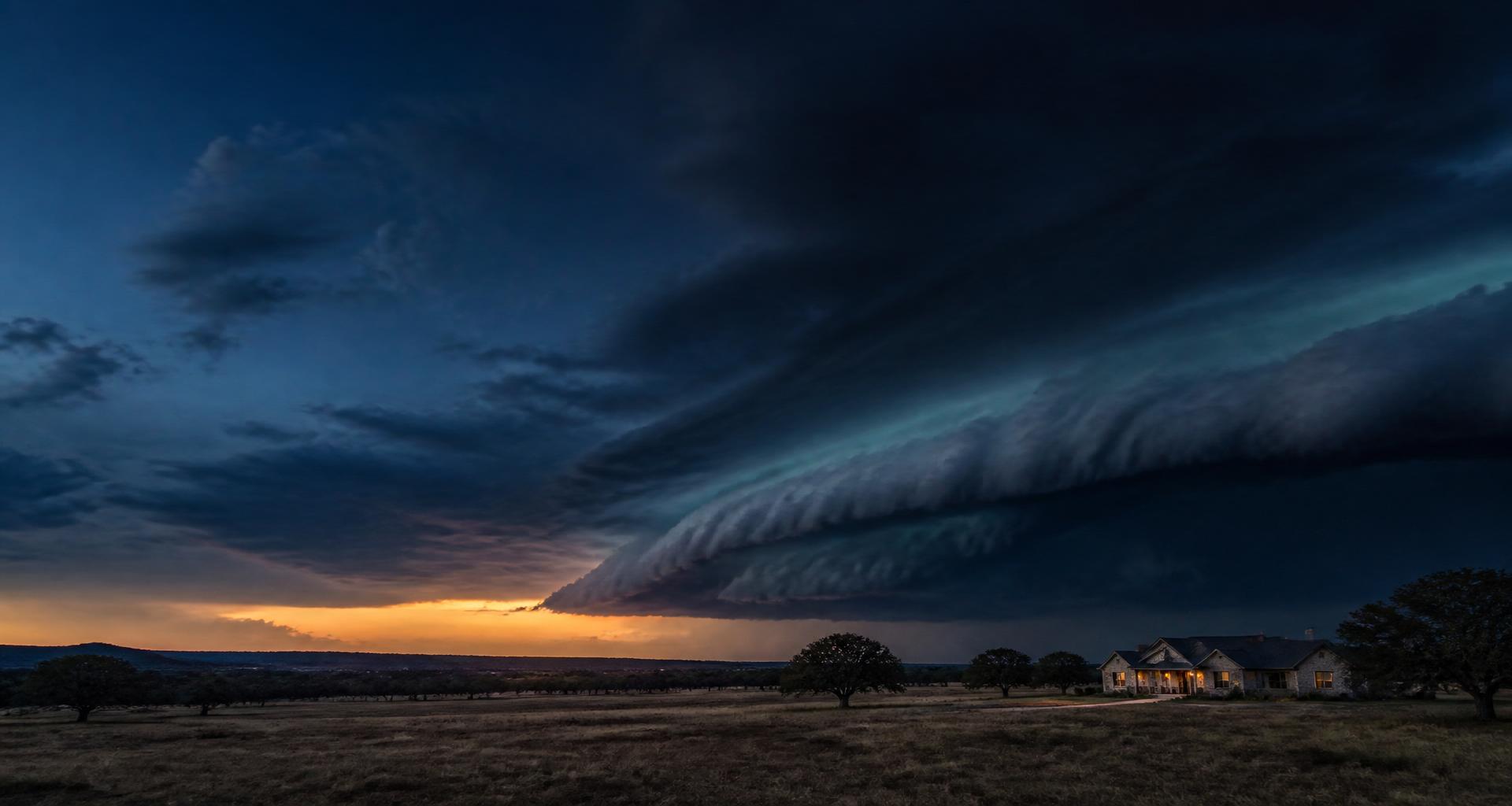
1. Texas's severe weather risk, by the numbers
Texas has absorbed more than $300 billion in weather and climate disaster costs since 1980 — more than any other U.S. state — and the state faces nearly every category of severe weather in the country.
On the Gulf Coast, Hurricane Harvey (August 2017) stalled over southeast Texas and produced catastrophic, days-long flooding — with more than 60 inches of rain in some locations — well inland from where it made landfall. The Atlantic hurricane season runs June 1 through November 30, with peak activity from mid-August through October.
Inland, North Texas and the Panhandle sit inside Tornado Alley, and the DFW Metroplex is one of the most hail-prone metro areas in the country — giant, softball-sized stones are not unusual in spring. East Texas shares the deadlier, nighttime cool-season tornado pattern of Dixie Alley.
Winter Storm Uri (February 2021) exposed a different vulnerability entirely — statewide hard freezes, grid failure, and widespread burst-pipe damage in homes never designed for sub-zero temperatures. Central Texas is also known as Flash Flood Alley, and the Panhandle and Hill Country see recurring wildfire risk in fall.
2. Texas seasonal preparedness timeline
Month-by-month, what's likely, and what to do this month to be ready.
| Months | Primary hazard | Do this month |
|---|---|---|
| Dec – Feb | Winter freezes, ice, burst pipes | Insulate exposed pipes, know where your main shutoff is, service generator, keep drip faucets and cabinet doors open during hard freezes. |
| Mar – May | Peak tornado + giant hail season (esp. DFW, N. TX) | Sign up for county alerts, identify safe room, park vehicles under cover before storms, review roof and hail-coverage limits. |
| Jun – Aug | Extreme heat, early hurricanes, derechos | Service HVAC, clear gutters, secure loose outdoor items, back up documents, fill vehicles before named storms. |
| Jun – Nov | Hurricane season (peak Aug–Oct, Gulf Coast) | Coastal counties: know your evacuation zone and route, install/inspect shutters or impact windows, refill prescriptions. |
| Sep – Nov | Fall wildfire risk (Panhandle, Hill Country) | Clear defensible space, remove leaf litter from roofs and gutters, confirm home inventory is current before year-end. |
3. Hardening your Texas home
In Texas, the biggest claim drivers are hail-damaged roofs, wind losses, burst pipes from hard freezes, and flash flooding — often in the same calendar year.
- Freeze & pipe prep. Insulate every exposed pipe — attics, garages, exterior walls. Know where the main shutoff is and how to open it in the dark. During hard freezes, drip faucets on exterior walls and open cabinet doors to let heat reach pipes.
- Hail-rated roofing. When re-roofing, ask for Class 4 impact-rated shingles. Many Texas insurers offer a premium discount for them, and they hold up dramatically better in DFW-style hailstorms.
- Coastal wind protection. Along the Gulf Coast, install hurricane shutters or impact-rated windows and reinforce garage doors — a common failure point in high winds. Confirm you have TWIA or private wind/hail coverage where required.
- Tree & limb management. Have an arborist inspect any large tree within striking distance of the house. Remove dead limbs and leaning trees before storm season, not after.
- Generator safety. Operate generators outdoors only, at least 20 feet from windows and doors. Never inside a garage — even with the door open. CO poisoning kills Texans every winter storm.
- Flash-flood barriers. In Flash Flood Alley (Central Texas, Hill Country), never drive into a flooded roadway. At home, keep sandbags or reusable flood barriers on hand if you're in a known flood-prone area, and elevate mechanical equipment where feasible.
4. Document your home before the storm
Hail, wind, and freeze claims in Texas are documentation-heavy — adjusters pay claims on proof, and undocumented belongings are the single biggest reason Texas homeowners get underpaid.
The Texas Department of Insurance recommends creating a detailed home inventory — room-by-room photos or video of your belongings — and storing it somewhere that will survive the event that damages your home. After a hailstorm or hurricane, a documented pre-loss record is the fastest way to a fair settlement.
- Walk every room with your phone and record slow, deliberate video. Open closets, drawers, and cabinets.
- Photograph the front of every appliance and its data plate (brand, model, serial number).
- Keep receipts, order confirmations, and warranty registrations for expensive items.
- Store the whole record off-site — cloud storage, an email to yourself, or a service that keeps a timestamped copy.
5. After a storm in Texas: first steps
- Call 911 for any life-threatening emergency. Account for family and neighbors. Avoid downed power lines, gas leaks, and damaged structures. Never drive into flooded roadways.
- Document damage before you clean up. Photograph and video every angle — exterior, roof from the ground, interior rooms, damaged belongings, hail dents on gutters and A/C fins, and any standing water lines.
- Make temporary repairs. Tarp the roof, cover broken windows, cap burst pipes, move wet items to dry spots. Save every receipt — insurers reimburse reasonable mitigation costs.
- Wait for the adjuster before permanent repairs. Cleaning up glass and debris is fine; replacing a roof or gutting drywall before the adjuster inspects will cost you on the estimate.
- Beware post-storm contractor scams. Texas sees a surge of door-to-door "storm chaser" roofers after major hail events. Never pay in full up front, never sign an assignment-of-benefits form under pressure, and verify a Texas contractor's credentials and references before hiring.
6. How to file a home insurance claim in Texas
- Call your insurer's 24/7 claims line. Have your policy number ready. Coastal wind/hail policyholders call TWIA at 1-800-788-8247.
- Get a claim number and adjuster name in writing. Put both at the top of every email and note.
- Send your documentation. Photos, video, receipts, your pre-loss inventory, and a written summary of what happened.
- Meet the adjuster on-site. Walk them through every damaged area — especially easy-to-miss items like hail-bruised shingles, dented A/C fins, water behind trim, and freeze damage in attics and exterior walls.
- Review the itemized settlement carefully. If items are missing or valued low, respond in writing with your evidence.
- Keep a claims diary. Date, person, phone number, what was said.
- If unresolved, contact the Texas Department of Insurance Consumer Help Line: 800-252-3439 (English & Spanish). Coastal TWIA policyholders: 800-788-8247.
Reminder: Standard Texas homeowners policies do not cover flooding — including hurricane and Flash Flood Alley rainfall. Rising water requires a separate NFIP or private flood policy, and most NFIP policies have a 30-day waiting period.
7. Texas emergency contacts
| Need | Contact |
|---|---|
| Life-threatening emergency | 911 |
| Texas disaster info & referral | 2-1-1 Texas |
| Texas Dept of Insurance Help Line | 1-800-252-3439 |
| Texas Windstorm Insurance Assn (coastal) | 1-800-788-8247 |
| FEMA Disaster Assistance | 1-800-621-3362 |
| NFIP Flood Insurance | 1-800-427-4661 |
| Find your county emergency management | tdem.texas.gov |
8. County & regional coordination
The Texas Division of Emergency Management (TDEM) organizes the state into 8 regions and 21 Disaster Districts. Under Texas law, your county Judge (or city Mayor) is the local Emergency Management director — the elected official responsible for evacuation orders, shelters, and damage reporting in your community. Your county Office of Emergency Management is usually the fastest number to have on hand during and after an event — find your county OEM at tdem.texas.gov.
Frequently asked questions
Official Texas Resources
-
TDEMTexas Division of Emergency Management — 8 regions, 21 Disaster Districts
-
Texas Department of InsuranceConsumer Help Line 1-800-252-3439 (English & Spanish)
-
Texas Windstorm Insurance AssnCoastal residual-market wind & hail insurer — 1-800-788-8247
-
2-1-1 TexasStatewide disaster info, shelters, and referrals
-
DisasterAssistance.govApply for federal disaster help
-
NFIP FloodSmartFlood insurance information — 1-800-427-4661
-
National Hurricane CenterOfficial NOAA tropical forecasts and advisories
-
NWS Fort WorthNational Weather Service — North & Central Texas forecast office
For the full preparedness, documentation, and claims playbook — plus other state guides as they roll out — see our main Storm & Tornado Preparedness Guide.