1. Nevada's wildfire risk, by the numbers
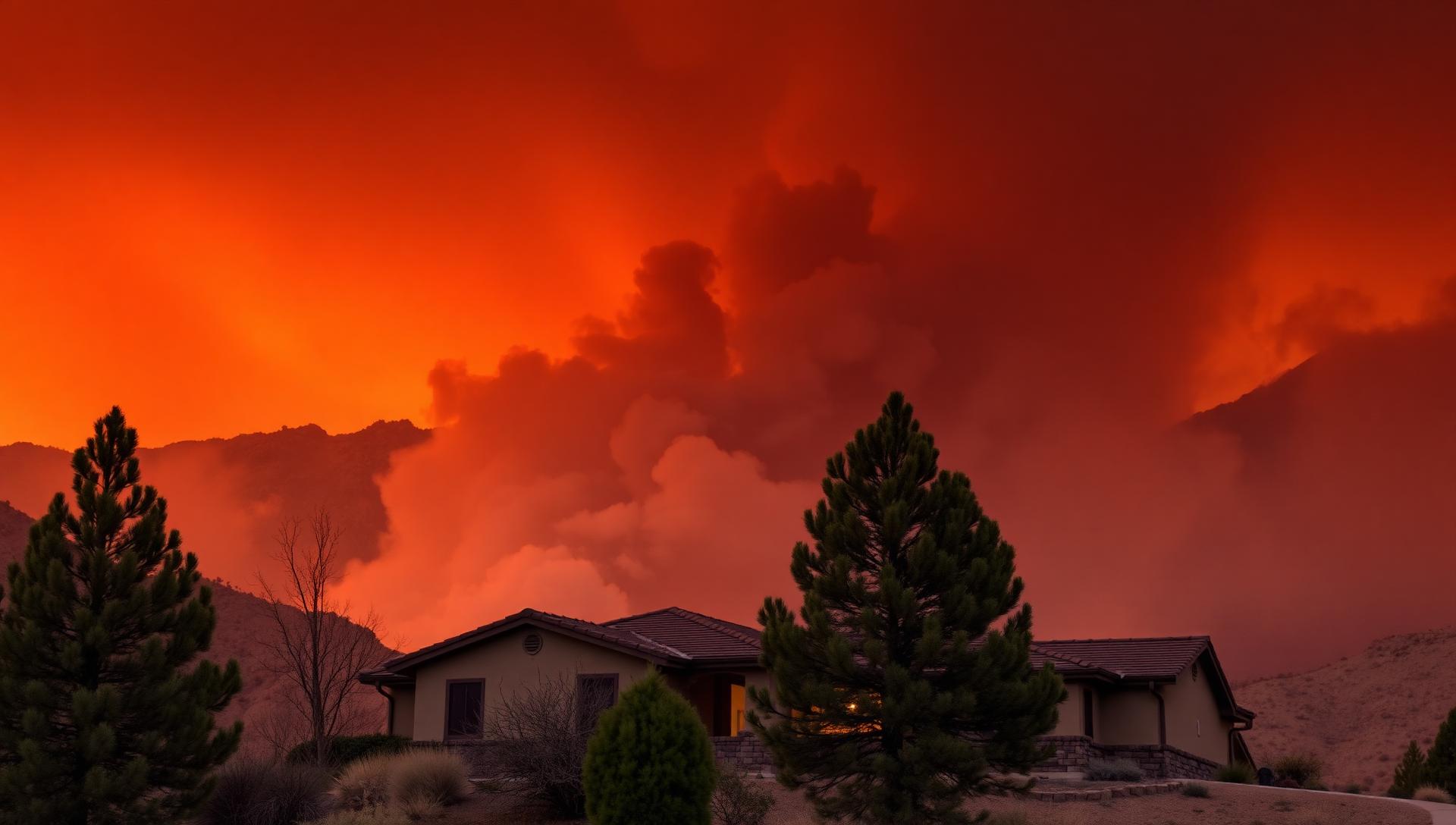
Nevada's fire problem sits at the intersection of dry Great Basin rangeland and Sierra-front WUI communities — and the insurance market is reacting hard.
Wildfire risk is concentrated along the Sierra front — Reno, Carson City, Tahoe, and Incline Village — where WUI communities sit against forest and brush. On the Great Basin side, dry rangeland grass and cheatgrass drive fast, wind-driven fires across enormous acreage.
In 2023, insurers canceled or non-renewed 481 Nevada home policies for wildfire risk — up 82% year-over-year — and declined roughly 5,000 applications (up 104.8%). Nevada homeowners also contend with flash flooding and earthquakes, but wildfire is what's reshaping the insurance market.
2. Defensible space & home hardening
In wind-driven Sierra-front and Great Basin fires, the first 5 feet around your house is the single most important zone.
- Zone 0 (0–5 ft) — non-combustible buffer. Gravel, hardscape, or bare mineral soil against the foundation. No bark mulch or wood chips, no combustible plants, no wood fencing attached to the house. Clear leaves and needles from roof and gutters.
- Zone 1 (5–30 ft) — lean, clean, green. Irrigated, well-spaced, low-growing plants. Keep grass mowed short. Remove dead vegetation. Trim tree limbs at least 10 ft from the house and 10 ft from the chimney. Move firewood piles out to Zone 2.
- Zone 2 (30–100 ft) — reduced fuel. Mow annual grasses and cheatgrass. Space trees so canopies don't touch — 10 ft apart on flat ground, more on slopes. Remove ladder fuels.
- Home hardening. Class-A rated roof, ember-resistant (⅛-inch mesh) vents, enclosed eaves and soffits, dual-pane or tempered windows, non-combustible siding where possible. Under-deck enclosure and non-combustible deck boards for exposed decks.
3. Build your home inventory long before wildfire season
Sierra-front wind-driven fires can give you minutes to leave. Documentation is what you can't reconstruct after.
When your home burns to the foundation, there is nothing left to photograph. The only proof of what you owned is what you captured before the fire, stored somewhere off your property. Adjusters pay contents claims on proof, and undocumented belongings are the single biggest reason Nevada homeowners get underpaid after a total loss.
- Walk every room with your phone and record slow, deliberate video. Open closets, drawers, and cabinets.
- Photograph the front of every appliance and its data plate (brand, model, serial number).
- Keep receipts, order confirmations, and warranty registrations for expensive items.
- Store the whole record off-site — cloud storage, an email to yourself, or a service that keeps a timestamped copy.
4. The Nevada insurance reality (no FAIR Plan)
Nevada does NOT have a FAIR Plan. A 2025 bill to create one — AB437 — died. And in 2025, Nevada enacted a law allowing insurers to EXCLUDE wildfire coverage from homeowners policies.
What that means for you. At renewal, your carrier may keep the policy but quietly drop wildfire as a covered peril. Read your declarations page carefully. If you can't tell whether wildfire is still covered, get the answer in writing from your agent before fire season.
If you're non-renewed or wildfire has been excluded. Contact an independent agent and shop both the standard admitted market and the surplus-lines (non-admitted) market — surplus-lines carriers write coverage that admitted insurers won't. Document any Firewise USA participation and home-hardening work; mitigation is increasingly what keeps or restores wildfire coverage.
Consumer help. If you feel a carrier is treating you unfairly, contact the Nevada Division of Insurance at 888-872-3234.
Nevada consumer resource. The Nevada Division of Insurance publishes guidance on wildfire coverage and non-renewals: 888-872-3234 / doi.nv.gov.
5. Evacuation planning
Nevada counties use the Ready-Set-Go framework and their own emergency notification systems. Sign up before fire season.
- Know your zone. Look up your county's emergency notification system (CodeRED, Genasys / Zonehaven, etc.) and register. Turn on Wireless Emergency Alerts on your phone.
- Ready — before fire season. Defensible space done. Home-hardening documented. Go-bag packed. Home inventory in the cloud. Two evacuation routes identified. Pet carriers accessible.
- Set — red flag warnings / nearby fire. Move go-bag and valuables to the vehicle. Park facing out. Full tank of gas. Charge phones and battery packs. Close windows and interior doors. Move flammable patio furniture and door mats away from the house.
- Go — evacuation order. Do not wait in wind-driven conditions. Take your go-bag, pets in carriers, medications, phone chargers, IDs, insurance info. Wear long sleeves and closed-toe shoes. Do not risk your life for possessions.
- Go-bag basics. N95 masks and goggles, prescription meds, phone chargers + battery pack, cash, copies of ID and policies, a written contact list, water and snacks, pet food and leashes, sturdy shoes and gloves.
6. After a wildfire in Nevada
- Do not return until officially cleared. Burned neighborhoods are closed for unstable structures, live wires, hot spots, and hazardous materials.
- Assume ash is toxic. Post-wildfire ash contains heavy metals, asbestos, and other hazards. Wear an N95 or better, gloves, long sleeves, and eye protection.
- Watch for flash floods and debris flows in burn scars. Burned Sierra-front hillsides can't hold water — the first significant rain after a fire can produce dangerous mud and debris flows.
- Document everything before cleanup. Photograph and video the exterior, interior, and every destroyed item. Do not remove debris until your adjuster and any state-managed debris-removal program has inspected.
- Beware post-fire contractor scams. Never pay in full up front, never sign an assignment-of-benefits form under pressure, and verify licensure before hiring.
7. Filing a Nevada wildfire claim
- Confirm wildfire is a covered peril. Read your declarations page or ask your agent in writing before you file.
- Open the claim immediately. Call your carrier's claims line. Get a claim number and adjuster name in writing.
- Ask about Additional Living Expenses (ALE) on day one. ALE covers hotels, rentals, meals, pet boarding, and mileage above your normal costs while your home is uninhabitable. Save every receipt from the moment you evacuate.
- Document smoke damage aggressively. Smoke penetrates HVAC systems, insulation, drywall, and porous belongings. Get independent air-quality and surface testing if the insurer resists remediation.
- Build the total-loss contents inventory. Use your pre-loss video walkthrough and appliance data-plate photos as the backbone. Reconstruct room by room.
- Keep a claims diary. Date, person, phone number, what was said. Nevada wildfire claims routinely take a year or more.
- If unresolved, call the Division of Insurance. Nevada Division of Insurance: 888-872-3234 (doi.nv.gov).
8. Nevada contacts
| Need | Contact |
|---|---|
| Emergency / report a fire | 911 |
| Nevada Division of Forestry | forestry.nv.gov |
| Nevada Division of Insurance | 888-872-3234 |
| FEMA Disaster Assistance | 1-800-621-3362 |
| Smoke / air quality | airnow.gov |
Frequently asked questions
Official Nevada Resources
For the full preparedness, documentation, and claims playbook — plus other state guides as they roll out — see our main Wildfire Preparedness Guide.